
Bringing the curriculum to life (Part 2)
When a professional photographer says, “That is the best photo I have ever taken,” you don’t argue.
There are photographs that record an event. Then there are photographs that define it.
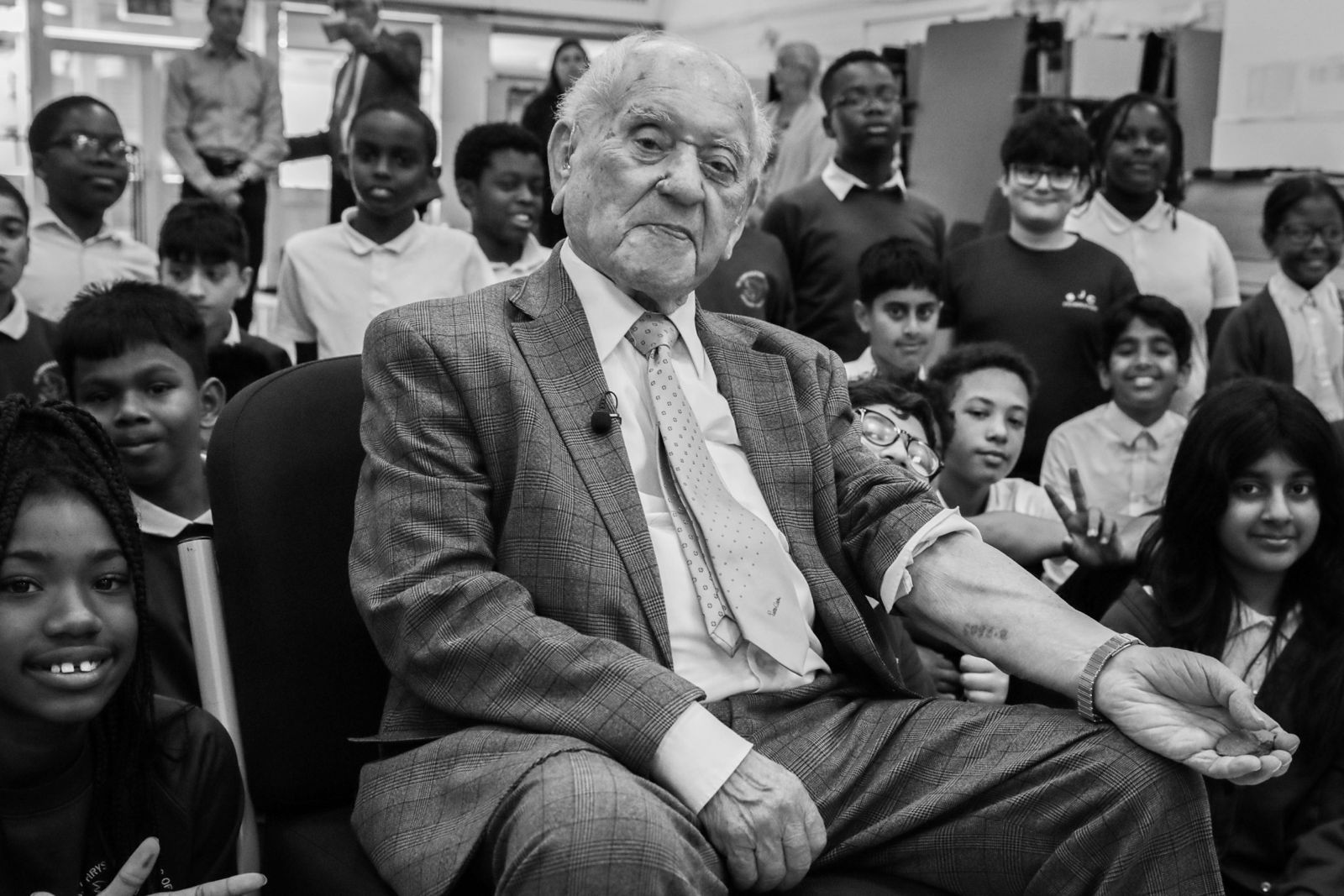
During our recent UNICEF Rights Respecting Schools pilot in Manchester, professional photographer Ruth captured what she believes is the finest image she has ever taken. Looking at it, it is easy to understand why.
At the centre sits Holocaust survivor Arek Hersch, surrounded by Year 6 children from one of Manchester’s most diverse primary schools. The children lean in, fascinated. They are listening to one of the last living eyewitnesses to one of history’s darkest chapters.
This photograph captures a remarkable moment, but it tells a much bigger story than the Holocaust itself.
Only a week earlier these same children had been exploring the Lake District, following in the footsteps of the Windermere Children and learning how survivors rebuilt their lives after the Second World War. The school assembly that we were privileged to lead brought that experience to its conclusion.
The pupils arrived expecting to watch a film of their adventure and reflect on the postcards they had written to the Windermere Children. They were delighted to receive a surprise video message from Eleanor Greene (producer of the BBC film The Windermere Children), who wished them well as they prepared for the next stage of their own lives.
Then came an even greater surprise.
One of the original Windermere Boys was waiting just outside the hall.
The collective gasp as Arek entered the room was unforgettable.
At 97 years old, Arek has spent more than thirty years educating young people. He doesn’t lecture or overwhelm children with facts and dates. Instead, he tells his story with warmth, humour and humanity, encouraging questions as they arise and building an immediate rapport with his audience.
Then, quietly, he rolled up his sleeve.
The room gasped once more.
On his forearm was the faded Auschwitz tattoo that has remained with him for more than eighty years. In that instant the children understood that someone had tried to erase a little boy’s identity and replace it with a number.
History suddenly became real.
Watching the pupils afterwards, it was clear that they had understood something no textbook could fully convey. They had not simply learned about the Holocaust. They had met someone who lived through it, listened to his story and recognised the humanity that others had once tried to take away.
I noticed the teaching staff were equally mesmerised. Seven years of teaching this cohort about kindness, forgiveness, inclusivity and resilience seemed to culminate in this single conversation with Arek.
Before the session, we had been careful not to overwhelm the children. Our philosophy is that ten-year-olds should leave inspired by resilience and recovery, not burdened by trauma. We wondered whether Arek’s testimony might be too much for pupils of this age.
We needn’t have worried.
The children listened with remarkable maturity, asked thoughtful questions and responded with genuine empathy. It reinforced an important point. Perhaps the challenge is not when we introduce Holocaust education, but how we do it. The curriculum itself may not be far from where it needs to be. The real difference lies in the delivery. That’s why we started outside, and finished in the classroom.
Arek never sought to shock. He built trust first and invited questions. He spoke with warmth and humour, placing humanity before history. By the time he rolled up his sleeve, the children already knew the man behind the number. That is why the moment was so powerful – not because it frightened them, but because they cared.
Looking around, I noticed something else. Many of the pupils were second- or third-generation British citizens whose families had also come to Britain from elsewhere in the world. Their journeys were, of course, entirely different from Arek’s, but there was a quiet connection. Like many of their own families, Arek had arrived in Britain as a child to begin a new life.
Perhaps that is why the conversation felt so natural. There was no sense of “them” and “us”. Just a wise gentleman sharing his experiences with children who listened with curiosity, empathy and respect.
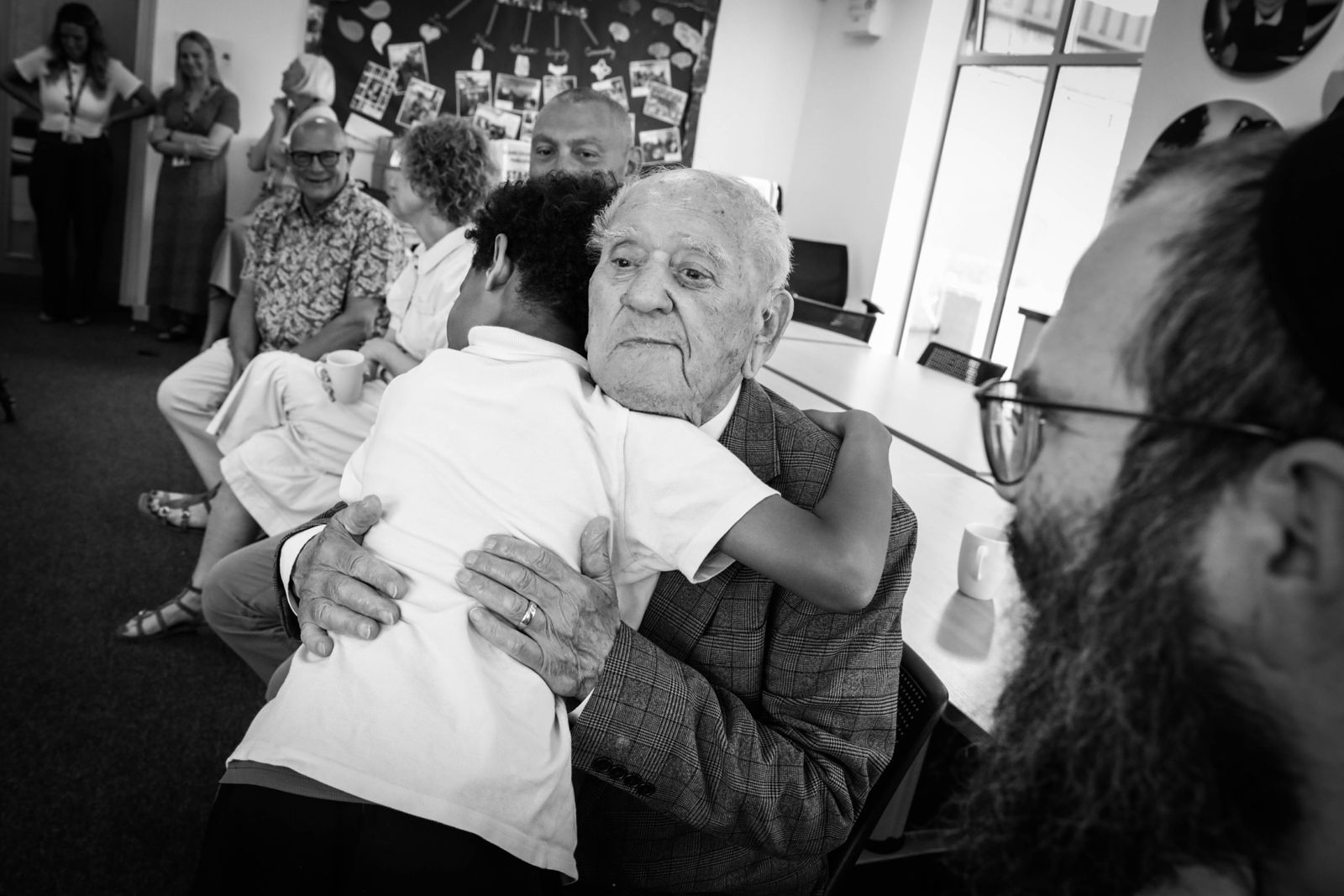
Arek never leaves empty-handed and gratefully took home all 60 postcards to read later. Afterwards, reluctant to return to their lessons, the children gathered around him in the lobby for an impromptu question-and-answer session. The final question came from one young boy, aged 10. “Can I have a hug?”
Perhaps the first photograph wasn’t the only extraordinary one she took that day?